WACQT - Wallenberg Centre for Quantum Technology Newsletter #22, 2026 |
|
|
|
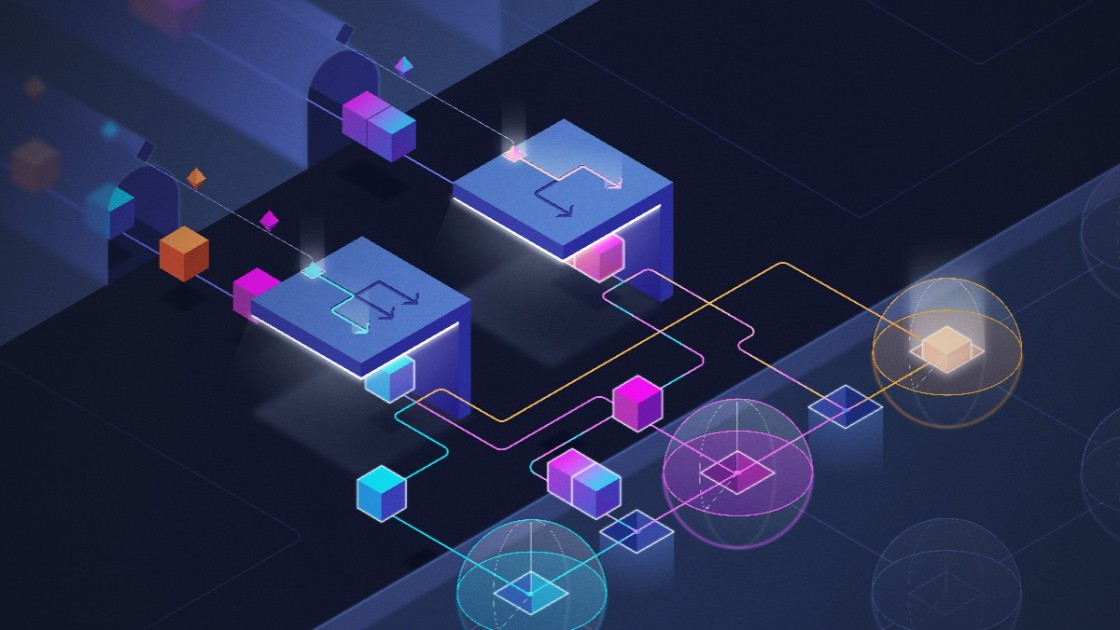
An artist’s rendering of time multiplexing of control signals to a quantum computer. The control signals for single-qubit gates (short blocks) and two-qubit gates (long blocks) travel through common cables (tunnels) to switches, which distribute them among the qubits (spheres) based on switching signals (diamonds). By ordering the control signals in a clever way, akin to playing Tetris, traffic jams in the flow of control signals can largely be avoided and programs on the quantum computer can be executed almost as fast as if each qubit had its own cable for control signals. Credit: Chalmers University of Technology/Boid |
Smart cable sharing gives quantum computers a big boost
| A major obstacle in the development of powerful quantum computers is the growing number of cables required to control a computer as the number of qubits increases. Researchers at Chalmers University of Technology in Sweden have now demonstrated that several qubits can share the same cable – without significantly increasing computation time. Their study is the most comprehensive of its kind and could become an important piece of the puzzle in developing quantum computers. These computers have the potential to revolutionise such areas as drug development and logistics. | | | | |
Eighth May Meeting in Gothenburg
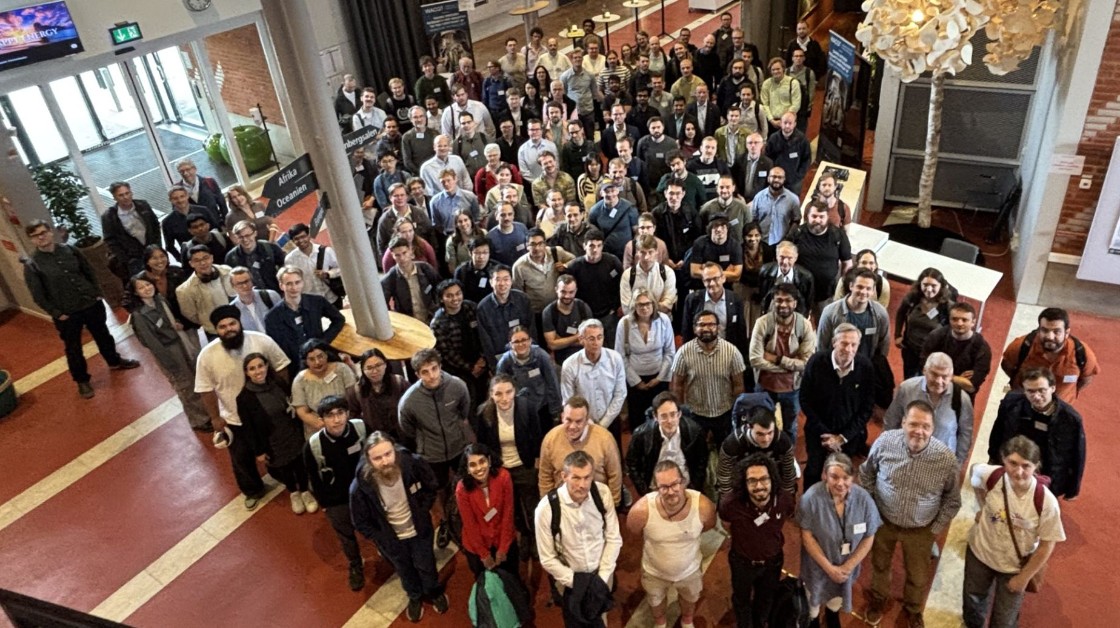
| Researchers, doctoral students and industry partners gathered in Gothenburg for WACQT’s annual May Meeting. The meeting brings together participants from six universities along with companies and international collaborators, reflecting the breadth of a growing national initiative. Around 50 presentations underlined both the activity level and the wide range of topics addressed. | | | | |
Call for SME projects: a brief heads-up
| We are planning to launch another call for SME projects with PhD students or postdocs. We aim to open the call late in September 2026 and close it by end of October. The extent and scope of this call is pending decision from the Board that convenes in late September 2026. If you have suitable ideas, please start discussing with potential partners, i.e. a researcher permanently employed at a WACQT university and an SME active in Sweden. Focus will as usual be on quantum technology or alternatively may focus on enabling technologies for quantum technologies. For questions, please contact,
Industry officer
: Cristina Andersson, cristina.andersson@chalmers.se | | | | |
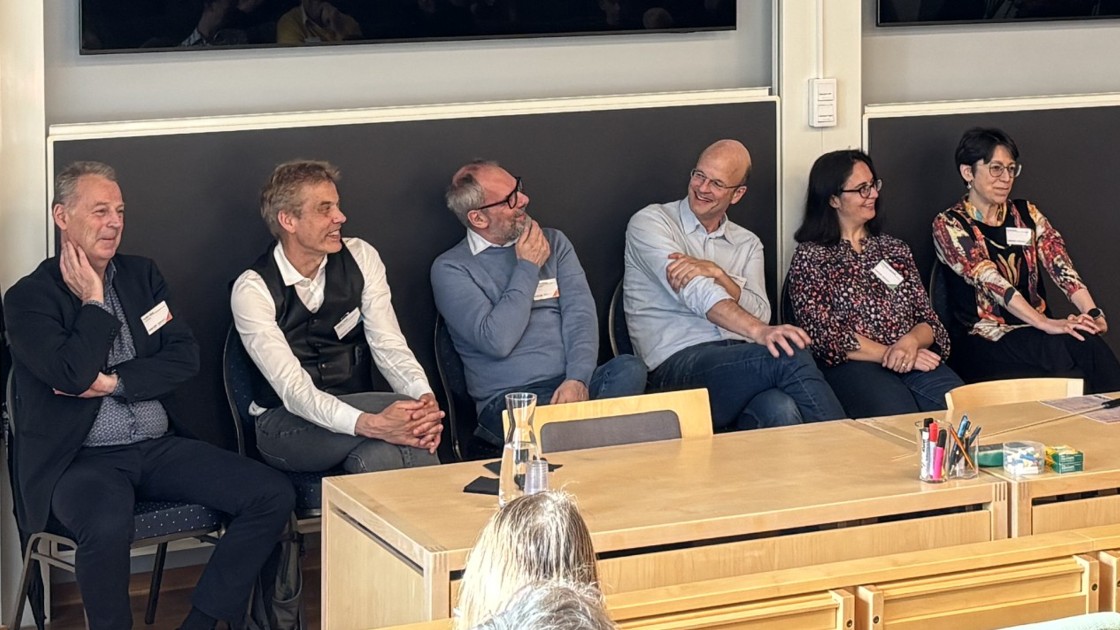
From left: Anders Broo (AstraZeneca), Eric Magnus Höjer (FOI), Mattias Grönkvist (Jeppesen), Peter Samuelsson (LU), Giovanna Tancredi (Chalmers), Katia Gallo (KTH)
|
Steady interest in WACQT’s annual industry workshop
| In 22 April, nearly 100 guests; companies, researchers and decision‑makers gathered at Chalmers for the 2026 WACQT Industry Workshop - a full‑day event showcasing the rapid development of the quantum ecosystem and the growing industrial interest in real‑world applications. | | | | |
Anne L’Huillier awarded Röntgen Medal
|
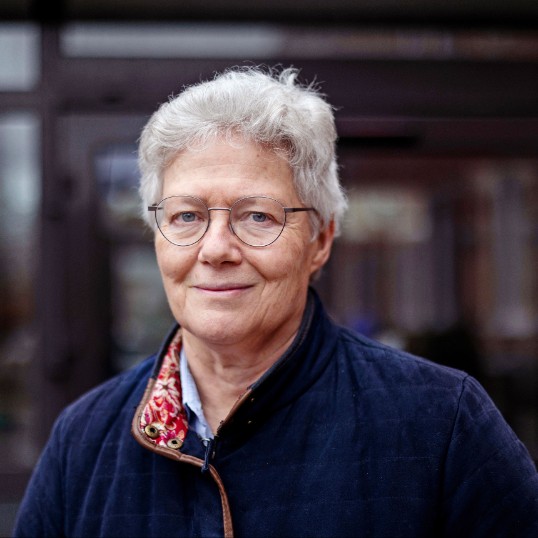
On 30 May,
Anne L’Huillier, will receive the award in Remscheid, Germany. The Röntgen Medal is a prestigious scientific prize named after Wilhelm Conrad Röntgen and honors outstanding contributions to physics, medicine, and technology. |
Podcast with Anne L’Huillier on attophysics
|
In the podcast
“A Lifetime of Attoseconds”,
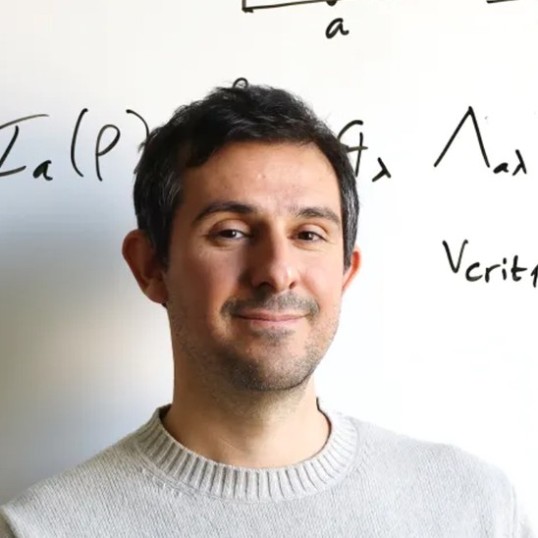
Nobel laureate Anne L’Huillier talks about attophysics, the ultrafast motion of electrons, and the research that almost four decades later - led to the 2023 Nobel Prize in Physics. | | | | Armin Tavakoli’s work highlighted by KVAArmin’s research centres on one of the most fundamental questions in quantum physics: What is actually possible? He is now being recognised by the Royal Swedish Academy of Sciences (KVA) for developing methods that help researchers map the limits of the quantum world. | | | | | | | |
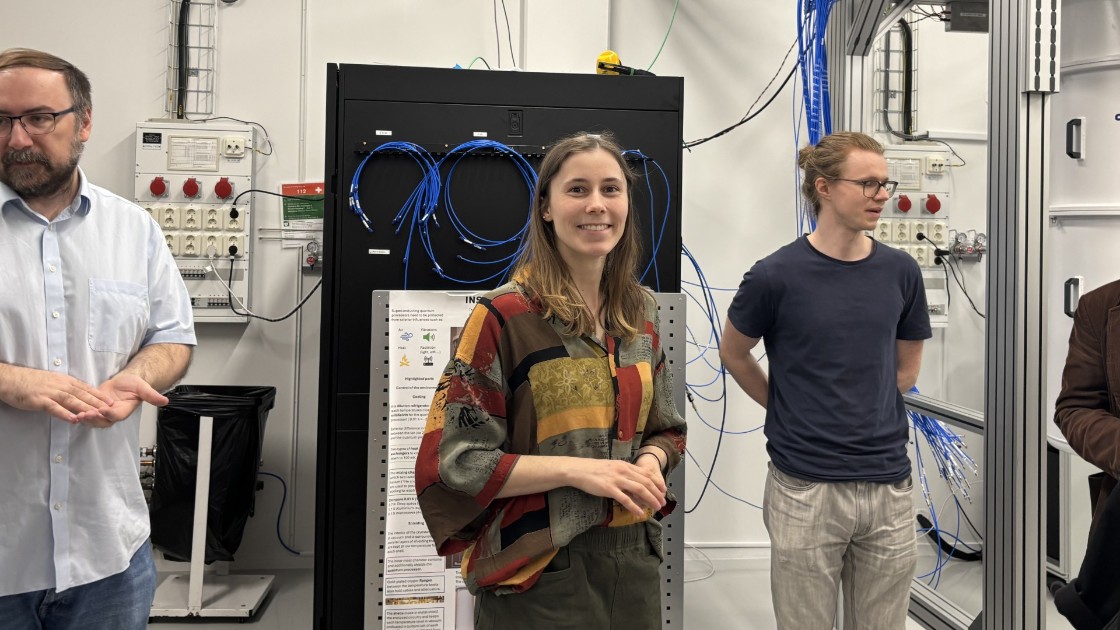
David Niepce (post doc) Albin Edenmyr, Theresa Fuchs (PhD) |
Open House sparked curiosity about quantum technology
| April 17: When Chalmers opened the doors to the world of quantum technology on 17 April, visitors of all ages were invited to explore cutting-edge research up close. The event was part of this year’s Gothenburg Science Festival. | | | | |
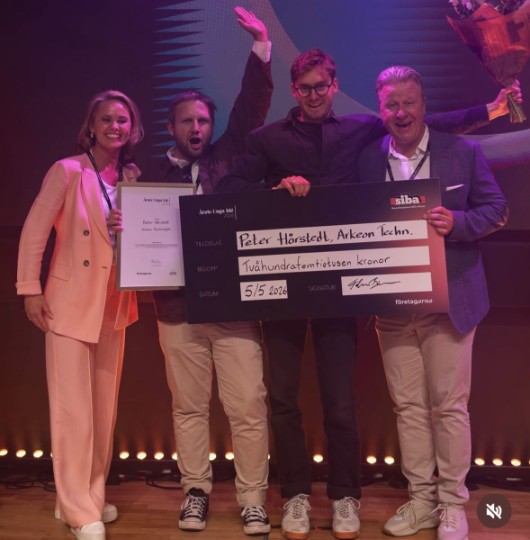
Peter Hörstedt & Andreas Nylander, Arkeon Technologies (middle). |
WACQT spinoff awarded scholarship
| Arkeon Technologies has been named Årets Unga Idé 2026 and awarded a SEK 250,000 scholarship from the Bengt Bengtsson SIBA Foundation. The prize recognizes a young entrepreneur with a high-potential, society-improving business idea in a field nearing commercial breakthrough.
Årets Unga Idé aims to promote and support young entrepreneurs developing innovative, society-improving business ideas. The competition is organised by Företagarna in collaboration with the Bengt Bengtsson SIBA Foundation. | | | | | Lund University - Assistant Professor in Quantum Technology
- Doctoral student in physics with a focus on quantum information theory and the foundations of quantum mechanics (not financed by WACQT)
Chalmers - Postdoc position in Theory of continuous-variable quantum computation and bosonic codes
| | | | |
School Field Trip: November 9-11
|
WACQT graduate school is organizing a visit to Delft and Amsterdam, to learn about efforts within quantum technology. | | | | |
Flagship Competition: latest June 12
| The first components of Magne are being assembled – who will be the first to use the system? A unique opportunity to gain early, exclusive, free access to Magne. Apply even if your idea is still developing. All applications are reviewed and contribute to shaping future use cases. Those proposals not selected, will be among the first early users when the system goes public.
Apply now and take part in shaping the future of quantum computing in the Nordics. | | | | |
Calls, Events and Industry outlook
| QSIP runs two newsletters; - QSIP Newsletter – A monthly newsletter with the latest news related to the Swedish Quantum Ecosystem. Here you will find information about our upcoming activities, open calls etc.
- QSIID (Quantum Sweden Innovation Intelligence Digest) – A curated monthly newsletter with external quantum innovation business news from around the globe
Quantum Sweden Innovation Platform (QSIP) is a national initiative aimed at stimulating and accelerating quantum technology innovation, supporting the growth of a competitive and attractive Swedish quantum industry. | | | | |
Experiment provides new understanding of the quantum physics of light and electrons
| | For the first time, quantum radiation reaction in strong electromagnetic fields has been demonstrated experimentally by allowing electrons to collide with an extremely intense and powerful laser beam. The research findings provide insights needed for new quantum-mechanical computational models and clues to how the laws of physics operate near neutron stars or black holes. | | | | |
Qubits created using unexpected materials
| For the first time, researchers have demonstrated that the properties of the perovskite family of materials can be used to create so-called quantum bits. The findings, published in the journal Nature Communications, pave the way for more affordable materials in future quantum computers. | | | | |
Quantum entanglement unravelled in time: Lund study in the international spotlight
| The researchers show how an intense light pulse can eject an electron from an atom, creating entanglement between the electron and the remaining ion. When the ion later emits a photon, the entanglement is passed on, resulting—for a fleeting moment—in all three particles – electron, ion, and photon – being entangled at the same time. | | | | |
Superconductor advance could unlock ultra-energy-efficient electronics
| Superconducting materials could play a crucial role in the energy-efficient applications of the future. However, several technical challenges still stand in the way of their practical use. Now, researchers at Chalmers University of Technology in Sweden have developed a new material design that addresses a major obstacle in the field: enabling superconductivity to operate at higher temperatures while also withstanding strong magnetic fields. This breakthrough could pave the way for far more energy-efficient electronics and quantum technologies.
| | | | |
Quantum computers might crack today's encryption far sooner than we thought
| | Experts have long warned about the threat that conventional cryptography faces from quantum computers, potentially undermining the foundational security of all digital encryption. New research now suggests that cryptographically relevant quantum computers (CRQC) can crack both RSA encryption and elliptic curve cryptography (ECC) far sooner than previously believed, making widely used encryption security systems vulnerable to attacks. | | | | |
IBM Plans $10 Billion Quantum Push as Efforts to Commercialize Quantum Intensifies
| | Fresh off news that the government is investing big bucks in IBM’s quantum tech, the company reports it is deepening its bet on quantum computing with plans to invest more than $10 billion over the next five years, according to a SEC disclosure.
The move reinforces the company’s push to build what it says could become the first large-scale fault-tolerant quantum computer by 2029. | | | | | - WACQT-WISE Collaboration projects (deadline August 27) Read more
- Excellence cluster for emerging technologies (deadline June 3) Read more
- Microsoft–QuNorth flagship project competition (deadline June 12) Read more
- Quantum Space Gravimetry topic (deadline September 2) Read more
- New primitives and protocols for functionalities of future hybrid classical-hybrid and quantum networks (deadline September 5) Read more
| | | | | |
|
|
|
|