Welcome to FibRe, dates and info, upcoming activities and more news |
|
|
|
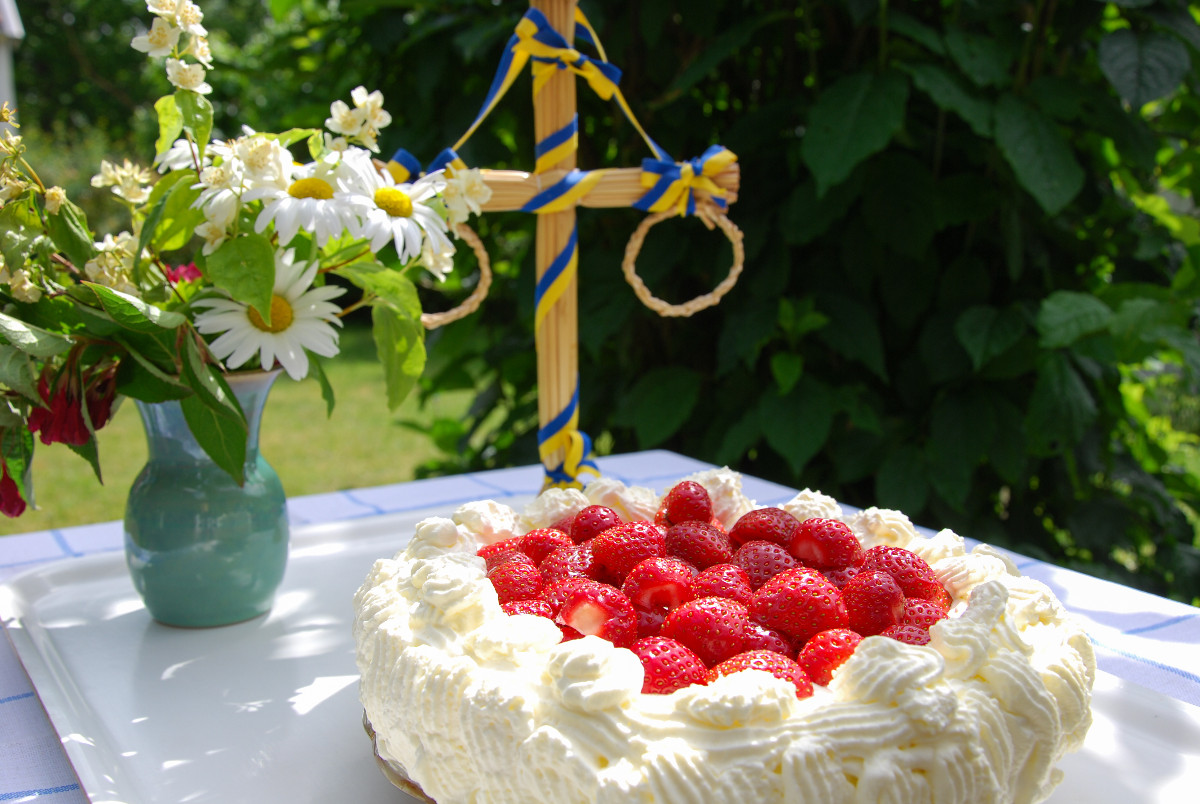
Dear members of FibRe,I’m one of
those born in Sweden who, unfortunately, have rather poor memories when it
comes to celebrating Midsummer. I partially blame my parents’ cows for that.
Good weather meant carting hay; bad weather meant bringing in the silage and
packing it into the clamp.
I remember
once having a Finnish professor visiting Chalmers. We were working on a
proposal but in the evening, we decided to celebrate Midsummer with
strawberries and cream in the garden. It ended in catastrophe: the garden
chairs collapsed, and we all ended up crawling around in the grass, topped with
strawberries and cream. Some years later, when the children were small, our
Norwegian friends came to visit, eager to learn how Swedes celebrate Midsummer.
We panicked but asked around among our neighbours and checked the garden chairs
thoroughly. It went alright, and since then, we've kept to a light version of the
Midsummer celebration. Last year, I decided to go home to Dad and show him how
to properly celebrate Midsummer, he’s never really learnt, even though we haven’t had
cows for 25 years. I think he enjoyed it. As for
FibRe, a few things have happened since the last newsletter which you can read more about below: - Patric and Åsa have graduated. It went very well, and you can find the link to their theses further down.
- The board
has approved seven projects (three of which are associated). In an interview, Arvindh discusses one of the project in more detail.
- The
Boundary Conditions group has reviewed the boundary conditions and checklist
from Phase I, made improvements, and is now ready to integrate them into our
“DNA.”
- A webinar
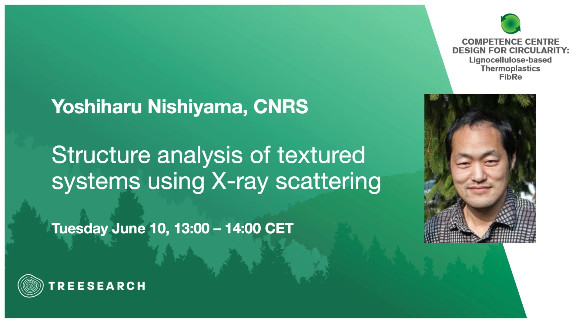
on X-ray scattering by the world-renowned Prof. Yoshiharu Nishiyama.
- Those
interested in developing demonstration projects will meet in August to discuss
the next steps.
With that,
I wish you all a “Glad Midsommar”, and hope none of you end up crawling in the
grass with cream and strawberries. Warm
regards, Anette
| | | Revised Boundary Conditions and checklistFibRe’s Boundary Conditions were
initially formulated by the Strategic Group (SG) at the start of Phase
I. Later in that phase, the Basic partners developed a complementary
Checklist to support the projects in aligning with these boundary
conditions.
Now
that we have entered a new phase and the centre has accumulated
substantial knowledge since the original version, it is time to revisit
and refine the boundary conditions. To this end, the SG has appointed a
working group to review and consolidate the two documents into a
clearer, more cohesive version that the entire centre can confidently
follow.
The working group, under the leadership of Hanna Hobohm Skoog, has now prepared a revised proposal (see the document "FibRe Boundary Conditions 2.0" on ProjectPlace). We kindly ask for your comments on the revised proposal by 18:00 on August 10th, preferably
by making small edits directly in the document and uploading it to the
same domain on PP. The revised document will be forwarded to the SG for
discussion at their next meeting. The outcome of that meeting will form
the basis of a proposal to be submitted to FibRe’s board for a decision
on September 4th. Thereafter, the approved list of Boundary conditions
will be presented and implemented in the centre during the autumn,
particularly at the FibRe meeting on October 8th at Chalmers. For other types of feedback, input or questions, please contact Camilla directly at camilla.johansson@chalmersindustriteknik.se.
| Workshop for demo projects - August 22ndFollowing
the summer break, on August 22nd, we plan to hold parallel workshops for our
two demo areas. These sessions will build on the digital brainstorming meeting
we had with our industrial partners earlier this spring. The goal of the
workshops is to define concrete demo projects that will support the development
of our physical demonstrators. During the workshop day, we will divide into two
groups, one for each demo area, but we will also come together for joint
sessions to ensure alignment and cross-collaboration. This will be an in-person
workshop held at KTH in Stockholm.
Questions
that we will try to answer during the day:
- Do we have the capability to
develop the intended product? Is there anyone in the centre who has the
necessary equipment, etc.?
- What do we need to know about
the material in order to manufacture the correct product? What properties
must the material have for the product to be manufacturable?
- Quantities?
- What properties?
- What do we need to analyse the
material?
- What do we need to develop the
material?
If you are
interested to join, please register via the button below:
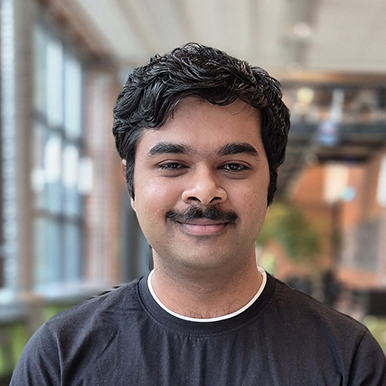
| Interview with Arvindh Seshadri SureshCan you tell us a little about yourself?I
come from the southern part of India, from a city called Coimbatore in the
state of Tamil Nadu. I lived in India
till my undergraduate studies and moved to Sweden for my master’s in 2021. Some of my hobbies include reading books
especially genres such as crime and mystery and playing badminton. I also love
to walk around the city, visit cafes and travel to different cities and
countries.
| | | What about your educational background?
My background is in
Mechanical and Materials Engineering. I have an undergraduate degree in
Mechanical Engineering from India, and I obtained my master’s from Chalmers
University in the Materials Engineering programme. During my master's programme, I worked
with various topics such as polymer melt extrusion, biocomposites, rheology and
material characterization, in the Rheology and Processing of Soft Matter Lab at
Chalmers. My research interests broadly include polymeric materials, biobased
materials, material processing and characterization. What can you tell us about the new associated project you're a part of?
Project 26* deals with the investigation of water interactions with biobased
materials focusing on cellulose derivatives. I will study how
different substituents in cellulose derivatives interact with water and control
water cluster formation. The project will develop and maintain knowledge around characterisation
methods needed to study the plasticisation of biobased materials by
plasticisers such as water. Additionally, it will contribute with knowledge and
skills in conducting experiments especially in different relative humidities
(RH).
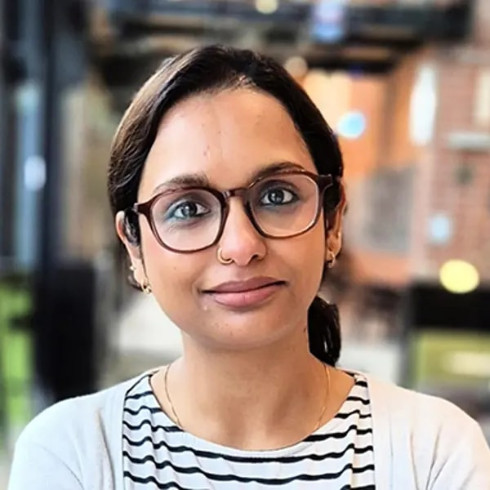
| | | Welcome back Nive!We also welcome back Nivedhitha Venkatraman as she joins the new associated project 28*: "Investigating Pulp Fiber
Properties Using Advanced
SIMS and X-ray Scattering
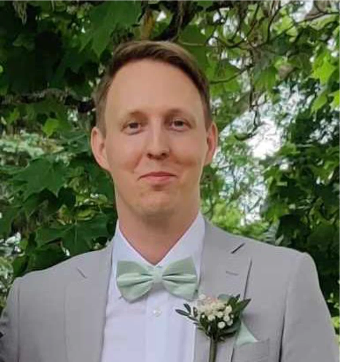
Techniques". | | | | Congratulations to Patric Elf and Åsa Jerlhagen FibRe wishes to congratulate Patric Elf and Åsa Jerlhagen
for their successful PhD defences! | How do you feel after your defence? | | | I'm happy,
relieved, and a bit overwhelmed. I'm happy because the defence went
really well and was a lot of fun. I especially enjoyed the discussions
with the opponent and the grading committee, which were both interesting
and engaging. I'm
relieved because the defence is essentially an examination and
evaluation of what can be described as your life's work. Naturally, you
always worry and wonder — "Is it good enough?" Fortunately, it was. And
finally, I'm a bit overwhelmed by all the love and support my
FibRe-friends and colleagues have shown me during and after the defence.
I feel truly blessed to have been part of FibRe, and I will miss
working with all the wonderful people within the centre as my time here
comes to an end. Read the abstract and download Patric's thesis "Prediction of Thermoplasticity in Lignocellulose-Based Materials using Molecular Simulations" via this link. | | | I had an incredible time at my
defence. I really enjoyed the discussions with my opponent and
committee, and the party after with friends and family was fantastic. I
am still feeling excited and full of energy after this incredible day! Now
I am looking forward to a little bit of rest, and then to get back to
the science I love. Thank you FibRe for these years of support - you
have really created a stable foundation for me during these years of
PhD, and friendships for life!
Read the abstract and download Åsa's thesis "Assembly of Colloidal Nanoparticles and Cellulose Nanofibrils" via this link.
| | | Latest webinar: Yoshiharu Nishiyama | Prof. Yoshiharu Nishiyama, CNRS, gave a presentation on "Structure analysis of textured systems using X-ray scattering" in the latest FibRe/Treesearch online seminar. If you missed the webinar you can still watch the recording on Treesearch's Youtube.
| | | | Upcoming events22 August, 10:30-16:00: Workshop for demo projects 2 September, 13:00-14:00: Webinar
8 October, 10:00-16:00: FibRe Meeting
18 November, 13:00-14:00: Webinar
You should have received placeholders/invites for all these events - if
that is not the case, please contact us at fibre@chalmers.se.
| | PublicationsPlease find below links to some of the recent publications from our
centre. On either ProjectPlace or our Chalmers webpage you can find the
extensive list. Sjölund, J., et al., On the determination of
charge and nitrogen content in cellulose fibres modified to contain quaternary
amine functionality. Carbohydrate Polymers, 2025. 347: p. 122734. Sjölund, J., et al., High-consistency modification of cellulose fibers:
Resource-efficient introduction of cationic charges, and their effect on fiber
and nanofibril properties. Carbohydrate Polymers, 2025. 352: p. 123254 - Karlsson, H., et al., Position-Specific Substitution in Cellulose Ethers
Studied by DNP Enhanced Solid-State NMR Spectroscopy. Magnetic Resonance in Chemistry,
2025.
| | | | | | | | | | |
Contact: fibre@chalmers.se Publisher: Anette Larsson Editor: Emma Andersson Unsubscribe to the FibRe newsletter
|
|
|
|