WACQT - Wallenberg Centre for Quantum Technology Newsletter #19, 2025 |
|
|
|
Dear Swedish Friends of Quantum Technology, In this 19th WACQT Newsletter, you find news about the 25-qubit chip taking the first steps towards public access. You also find research highlights and start-up successes, where Atlantic Quantum joining Google certainly is one of them. Also, don’t miss the opportunity to hear Nobel Laureate Michel Devoret speaking at a symposium on Quantum and AI at Chalmers November 24-26. You find exciting news about quantum communication as well a concentrated NORDITA workshop on Fault Tolerant Quantum Computing and the ATTO X conference in Lund with 450 participants. In short, Quantum Technology in Sweden is a very lively community in all aspects!
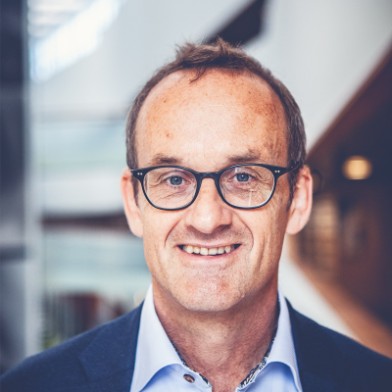
Göran Johansson, director of WACQT
| | | | | | | | |
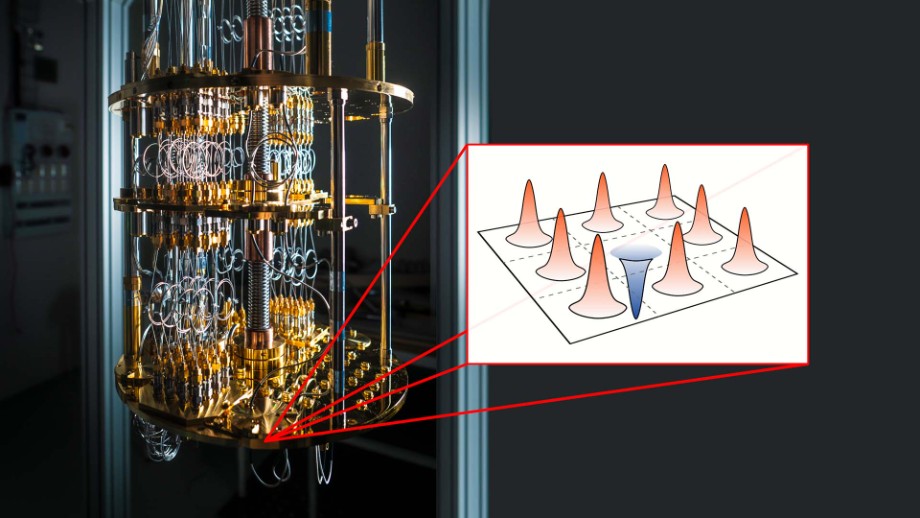
Researchers have found a simple way to simulate complex quantum states using wave-like patterns in a continuous-variable quantum computer.
Image: Chalmers | Cameron Calcluth |
World-unique method enables simulation of error-correctable quantum computers
| Quantum computers still face a major hurdle on their pathway to practical use cases: their limited ability to correct the arising computational errors. To develop truly reliable quantum computers, researchers must be able to simulate quantum computations using conventional computers to verify their correctness – a vital yet extraordinarily difficult task. Now, in a world-first, researchers from Chalmers University of Technology, the University of Milan, the University of Granada, and the University of Tokyo have unveiled a method for simulating specific types of error-corrected quantum computations – a significant leap forward in the quest for robust quantum technologies. | | | | |
Atlantic Quantum is joining Google Quantum AI
| Atlantic Quantum is a result of frontier research carried out at the Department of Microtechnology and Nanoscience and Wallenberg Centre for Quantum Technology, WACQT, at Chalmers University of Technology and Massachusetts Institute of Technology. The company was formally spun out of Will Oliver’s Engineering Quantum Systems Group at MIT in 2022 – and was founded with the mission to build a quantum computer that could economically scale to address real-world problems.
| | | | |
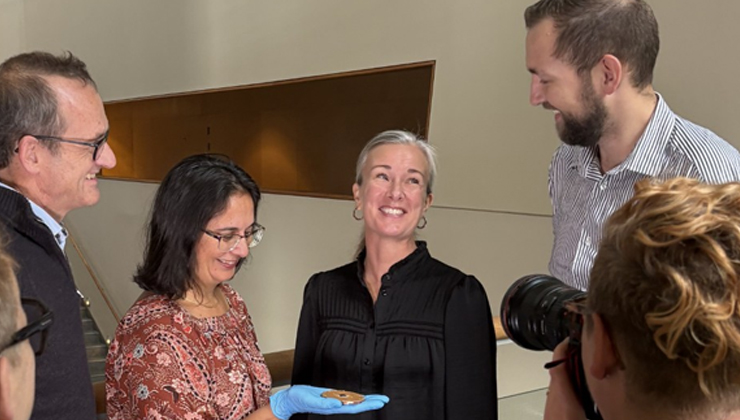
Göran Johansson,Giovanna Tancredi (WACQT)
Monica Ringvik, Mårten Skogh (Chalmers Next Labs) |
25-Qubit chip handed over to testbed
| WACQT has reached a major milestone in its mission to build a quantum computer. A developed 25-qubit chip has been handed over to the Quantum Technology Testbed, where it will be installed in a replica setup for full system integration and testing. In parallel, researchers will continue to develop the next generation of the chip, scalable toward 50-100 qubits. This collaboration between academia and industry is essential for building the knowledge and competence needed to realize a national quantum computing capability.
The testbed, open since 2024, has supported internal system integration, software stack testing, and early-stage research. In the coming months, it will open to more users and industry partners, whose testing will help drive the technology forward. | | | | |
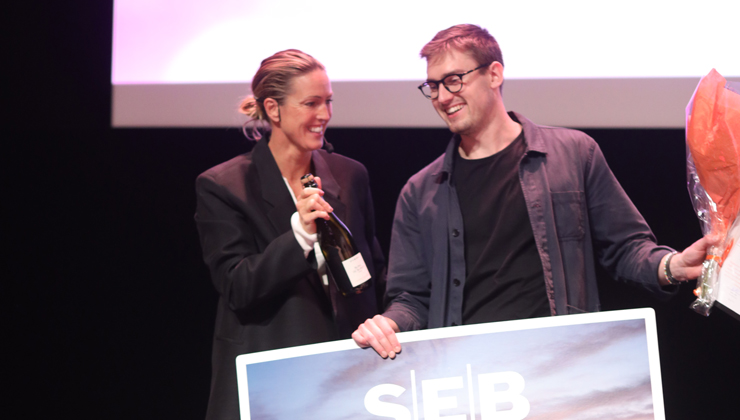
Peter Hörstedt receiving price at Venture Cup.
|
Arkeon Technologies – named both Startup of the Year and Game Changer at Venture Cup Sweden 2025!
|
Arkeon Technologies AB, a spin-out from WACQT, is making waves in the Swedish deep-tech landscape. Founded by Peter Hörstedt and Andreas Nylander, the company is pushing the boundaries of scalable superconducting quantum processors - built on the very tunnelling junctions recognized by this year’s Nobel Prize in Physics.
| | | | |
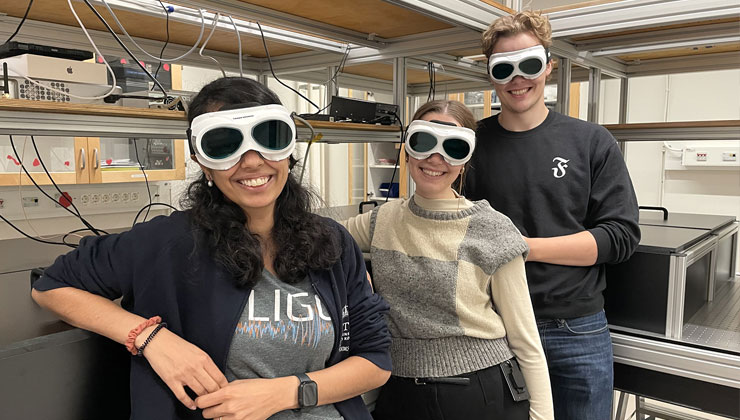
Vaishali Adya, Hilma Karlsson and Erik Svanberg protect their eyes from the laser light in the lab. Photo: Anna Gullers
| Quantum keys can keep our secrets safe
| | The super machine of the future, the quantum computer, is taking the step from theory to reality. At Your bank login, your health data, even your private messages – all rely on encryption. But future quantum computers could crack them in seconds. To stay ahead, researchers at KTH are turning to quantum physics itself, developing technology that keep our communication secure for decades to come.
| | | | |
Nov 24-26: Looking into the future with quantum and artificial intelligence
| A symposium on Quantum Science and Artificial Intelligence that brings together the brightest minds in science. Prepare to be captivated by a series of compelling lectures and dynamic discussions that will dive into the latest groundbreaking discoveries and innovations.
Among the speakers:
Michel Devoret, Yale University – Nobel Laureate 2025
Dr. Heike Riel, IBM Fellow
Per Delsing, Chalmers
Tracy Northup, University of Innsbruck
Part of the International Year of Quantum Science and Technology 2025. Co-organized by Chalmers and WACQT with Molecular Frontiers. | | | | |
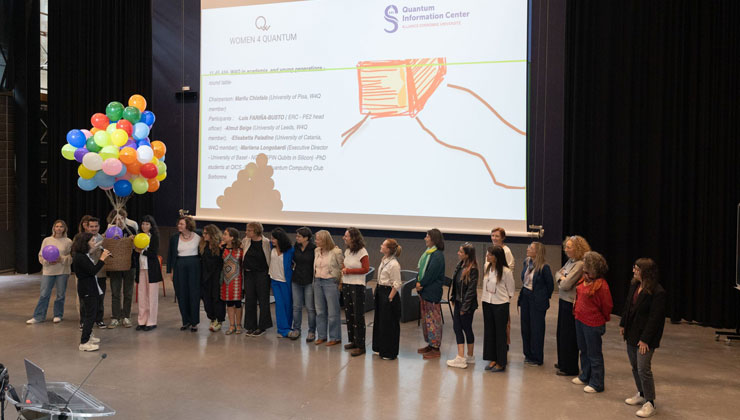
Leading quantum scientists. | Manifesto for women in quantum accepted
|
A group of 33 leading quantum scientists from Europe and Japan have written the manifesto to call for “changes in the current model of scientific leadership, funding, and authority,” hoping to remove barriers to the participation of women and other underrepresented groups. The Manifesto, endorsed by many within WACQT, has been accepted for publication in Communications Physics. “We hope that the manifesto of values will inspire all scientists within the quantum technology community and beyond, and contribute to foster a more inclusive and supportive environment.”Giulia Ferrini, WACQT. | | | | |
Future Research Leader and Appointed Editor at Physics Journal
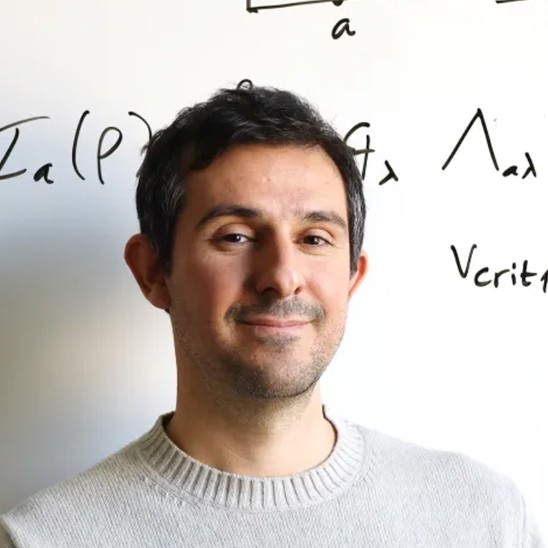
| Armin Tavakoli, Lund University, has been named one of the Swedish Foundation for Strategic Research’s Future Research Leaders 2025. His groundbreaking work in nonlinear optics and quantum communication is paving the way for transformative advances in technology and society. In addition, Tavakoli has been appointed Associate Editor for Physical Review Letters (PRL), one of the world’s most prestigious journals in physics—further highlighting his growing influence in the field.
| | | | |
Quantum communication could become the superpower of the future
| Katia Gallo has always been fascinated by the combination of the laws of physics and engineering. She currently coordinates Sweden’s participation in a European initiative to build a quantum communication network.
“We are developing an infrastructure in Sweden that will eventually be linked with those of other EU member states,” she says.
| | | | |
WACQT Teacher Network at KTH. |
WACQT Teacher Network Workshop
| The second workshop for the teacher network took place at KTH — a lunch-to-lunch event for educators from Swedish universities involved in or interested in undergraduate quantum technology teaching. Organized by EDU-WACQT and the WACQT Graduate School, the workshop aimed to coordinate and strengthen quantum education efforts across institutions. The program included discussions, networking, and lab visits to support collaboration and curriculum development.
| | | | |
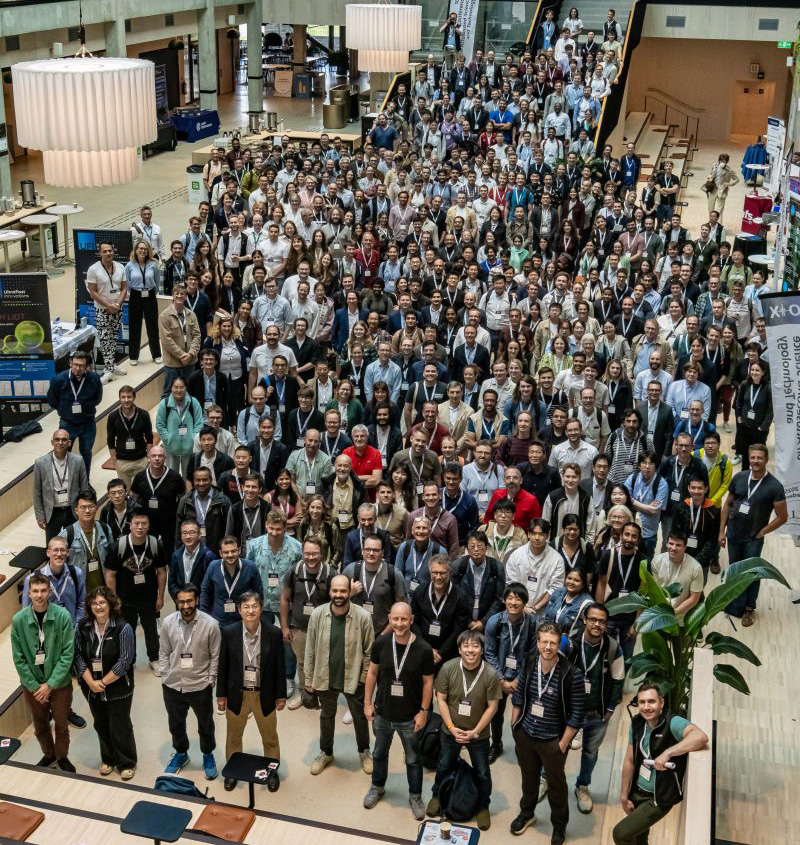
Conference guests. Photo: Anne-Lis Viotti |
Attosecond Science conference in Lund
| ATTO X, the premier international conference on attosecond science, was held in Lund, Sweden, July 6–11, 2025. The event gathered global experts to present cutting-edge research in ultrafast science, attosecond light sources, and strong-field physics, featuring tutorials and talks from leading institutions worldwide. 450 registered participants,26 invited talks, 49 contributed talks, 300 posters and 21 exhibitors. The event was partly supported by the WACQT
Guest Reseachers Programme.
| | | | |
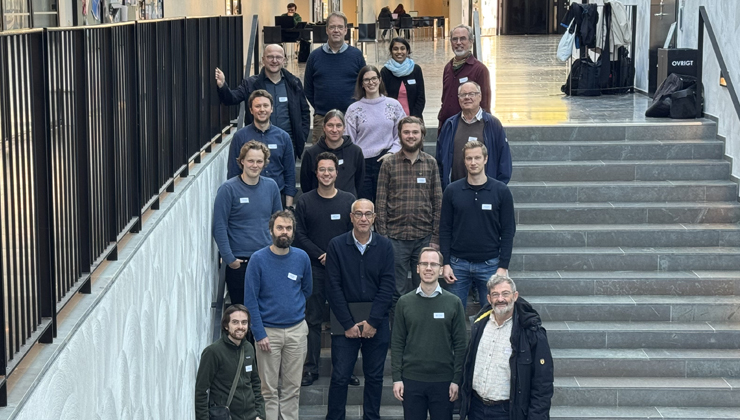
Conference guests. Photo: Mats Granath
| Fault-Tolerant Quantum Computing: From Theory to Practice
| | A three-week international symposium took place at Nordita in Stockholm, bringing together leading experts from around the world to explore cutting-edge theoretical and experimental developments in fault-tolerant quantum computing. The program featured seminars and tutorials aimed at fostering collaboration and supporting the training of emerging researchers in the field. The event was partly supported by the WACQT Guest Reseachers Programme. | | | | | New open-source tool revolutionizes quantum chip design
| Researchers developed QDesignOptimizer, a tool that helps scientists design quantum chips more easily and accurately. Instead of manually adjusting the design, the tool uses simple physical relations and simulations to automatically improve how quantum circuits perform. This speeds up the process, makes it more reliable, and helps researchers create better quantum circuits. That’s an important step toward building practical quantum computers.
| | | | |
David Haviland's research group is focusing on a quantum computer that uses microwaves and creates a kind of quantum entanglement. Photo: Christer Gummeson
| The quantum computer – a super machine with challenges
| | The super machine of the future, the quantum computer, is taking the step from theory to reality. At KTH, research is being conducted on everything from how the hardware itself should be built to what problems a quantum computer can actually solve.
| | | | | WACQT is committed to promoting career development, diversity and gender equality through networking and supporting activities. | | | | |
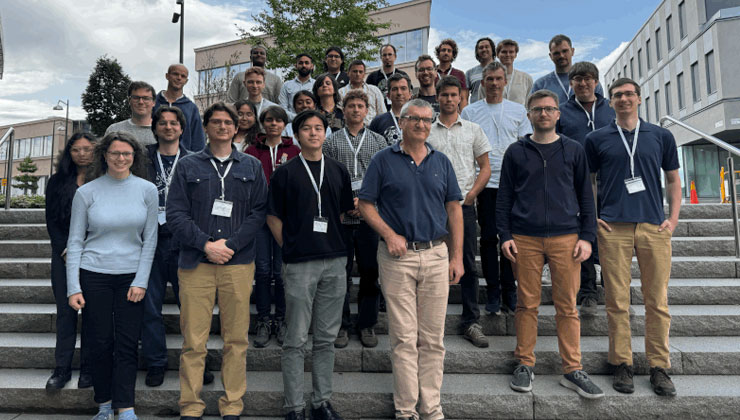
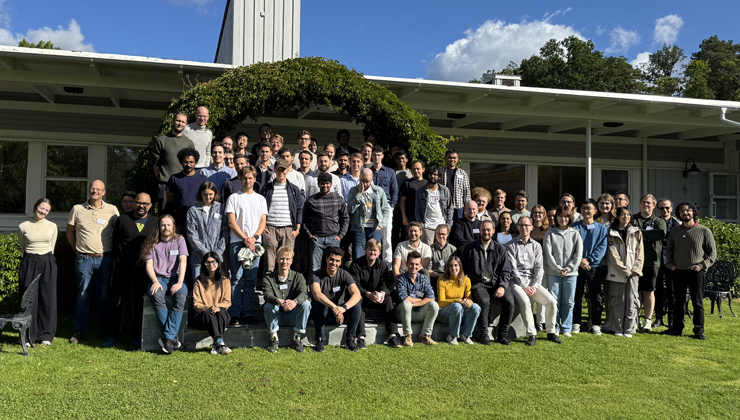
WACQT’s Fourth Biennial Summer School
|
In July, WACQT hosted its fourth biennial summer school at Aspenäs Herrgård, gathering just over 60 PhD students for a week of intensive learning, networking, and skill development in quantum technology.
The WACQT Summer School is a cornerstone in building a strong quantum research community. It offers early-career researchers a unique opportunity to connect with peers and leaders in the field, advance their education in quantum technologies, and foster interdisciplinary collaboration.
| | | | | UR Highlights research in “Sverige forskar” Series
| | The Swedish Educational Broadcasting Company (UR) recently visited Chalmers and produced several short videos highlighting ongoing research in quantum technology. These segments are part of the educational science series Sverige forskar, which showcases cutting-edge research across Sweden.
The program aims to make complex scientific topics accessible to a broad audience and is available to stream on UR Play.
| | | | |
Excellence cluster planning meetings:
| Do you want be part of the discussion about potential national science council excellence clusters on quantum computing and quantum sensing? The discussion group for better quantum computers will meet up soon. You find more details here or contact
Anton Frisk Kockum (anton.frisk.kockum@chalmers.se) directly. | | | | | As part of the preparatory work on Quantum Sensors, supported by funding from both the Swedish Research Council (VR) and Vinnova, QSIP are organizing a joint workshop in Lund on November 26–27, 2025. More information will soon be published here:
Excellence cluster: Quantum Sensor Workshop - QSIP
You can already now express your interest to join. | | | | |
Nordic Quantum Network - opportunities
| Find quantum-related events, courses, and open positions in the Nordics: website or on LinkedIn.
A selection of upcoming opportunities for students and researchers: - PhD Course in Quantum Error Correction starts this November at the University of Gothenburg. Hybrid format, free registration open to all Nordic PhD students.
- PhD Course in Quantum Thermodynamics and Information starts in January at Chalmers. Hybrid format, free registration open to all Nordic PhD students.
- Quantum Machine Learning School/Conference in Stockholm, February 2–13. Free registration open until October 31. A full list of events is now available on the Nordic Quantum Network website.
- Nordic Innovation opened a call for project proposals: Green and Competitive Nordic Region, with deadline 11 February 2026. Infowebinar about it on 14 October at 13h.
Contact for advertising: Ariadna Soro ariadna.soro@su.se.
| | | | |
43 Million Kroner for Quantum Technology Investment
| The Norwegian government aims to ensure that Norway keeps pace in the international race for knowledge in quantum technology. The Research Council of Norway is now allocating a total of 43 million kroner for research equipment dedicated to quantum technology research. Read more | | | | | Researchers predict new intertwined quantum states in moiré materials
| In the rapidly evolving field of quantum materials, theorists at Stockholm University are pushing the frontier of what kinds of exotic matter can exist. Two new works—one just published in Nature Communications and another selected as an Editors’ Suggestion in Physical Review Letters—reveal strikingly unconventional states of electrons that could pave the way for future quantum technologies. Read more | | | | | |
|
|
|
|