WACQT - Wallenberg Centre for Quantum Technology Newsletter #18, 2025 |
|
|
|
Dear Swedish Friends of Quantum Technology, First of all, I would like to warmly welcome Giovanna Tancredi in her new role as co-director of WACQT, which started 1st of June! You find an interview with her below. I would also like to again thank Lena Gustafsson for all her work with WACQT, which has now grown into a full Swedish eco-system for quantum technology. It is valuable that Lena has promised to be available also in the future, in the role of senior adviser. It is also very welcome that Pontus de Laval, with his extensive experience from industry will now further increase his engagement in WACQT, as the new chairman of the board. This is very valuable, not at least in the view of the engineering efforts needed to scale up the core project and the continuously growing eco-system and engagement from industry. I would also like to sincerely thank Jonas Bylander for his strong engagement and work on the core project from the start of WACQT. Due to his extensive commitment in Atlantic Quantum, the successful start-up he co-founded, we decided that he will step down from his role as PI in WACQT. It is very valuable for us that Jonas will continue to be available for advice, but with less responsibilities within WACQT. Then, looking outside of Sweden, 11th of June, at a meeting in Paris NVIDIA’s CEO Jensen Huang concluded that we have now reached an inflection point for the development of quantum computing, noticing Google’s recent results on scalable error correction. He foresees 10 times more logical qubits every 5 years, a new kind of Moore’s law. In January, he said that quantum computing is at least 15 years away from having practical implications. (Actually, both statements can be true.) In Sweden, the research bill has passed parliament, and we are waiting for more information from VR and Vinnova about the coming SFO (strategic research area) on Quantum Technology and excellence clusters, where quantum technology is one of Vinnova’s six named disruptive technologies. This makes it likely that the government’s effort on quantum technology will be comparable or even larger than KAW’s effort in 2028. This is very good news for Quantum Technology in Sweden! Naturally, this also creates lots of activity among Sweden’s friends of Quantum Technology, trying to figure out the future vision and good ways to organize the ecosystem. Currently, there are ongoing discussions between KTH, Lund and Chalmers for the SFO. In the PI-group, we also decided to look into three potential excellence clusters, one on sensing coordinated by Peter Samuelsson, one on communication coordinated by Katia Gallo and one on computing initially coordinated by me. The intentions from VR and Vinnova are somewhat unclear, but the three clusters will be developed so that they could fit together into one large excellence cluster for quantum technology. In all three clusters, there should be components of basic research and utilization together with small and large companies. Furthermore, in this newsletter you find information about quantum enhanced timekeeping, new funding possibilities for SMEs, recaps of our May meeting and Industrial Workshop, and much, much more.
Göran Johansson, director of WACQT
| | | | | | | | |
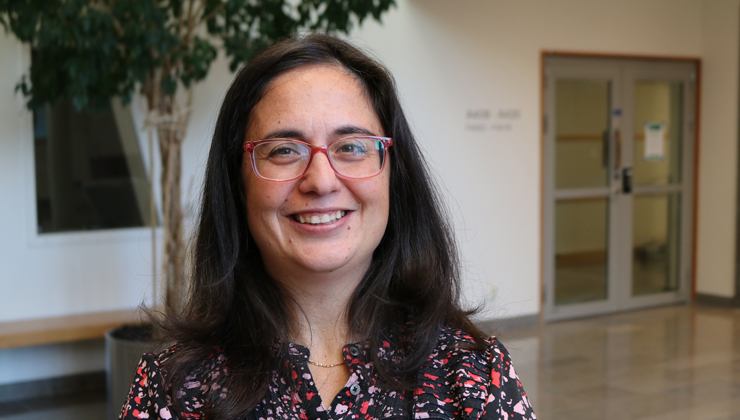
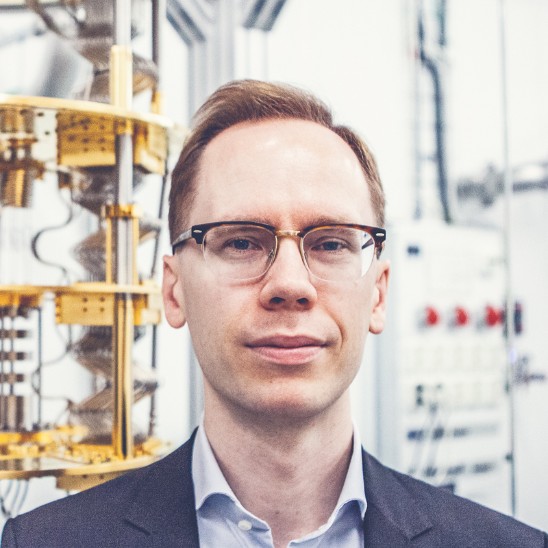
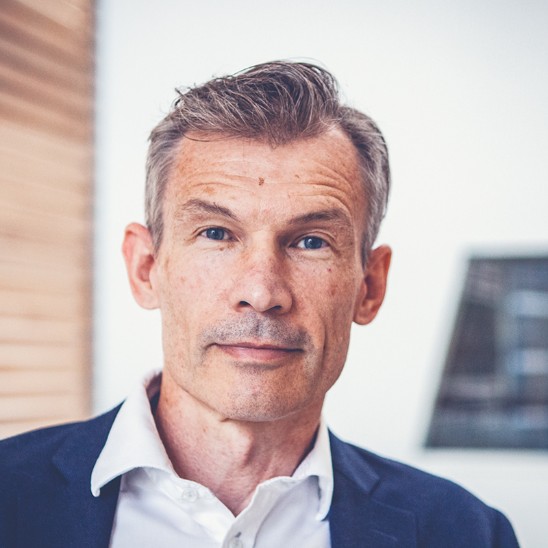
Giovanna Sammarco Tancredi - Photo: Lovisa Håkansson |
Giovanna Sammarco Tancredi new Co-Director
| On June 1st, Giovanna Sammarco Tancred officially stepped into her new role as Co-Director of WACQT. Giovanna is a Senior Researcher at Chalmers and a leading figure in Sweden’s quantum computing efforts. Since joining Chalmers in 2018, she has played a central role in developing Sweden’s 100-qubit quantum processor. Giovanna also co-founded SCALINQ, a company focused on cryogenic hardware for quantum technologies. – Taking on the role of Co-Director of WACQT is both an honor and a responsibility. The role involves strategic leadership, coordination across research areas, and representing WACQT in both national and international arenas. As Co-Director, I expect to contribute by fostering interdisciplinary collaboration within WACQT, strengthening our connections with industry and international partners, and ensuring that our research remains both ambitious and focused on real-world impact.
| | | | |
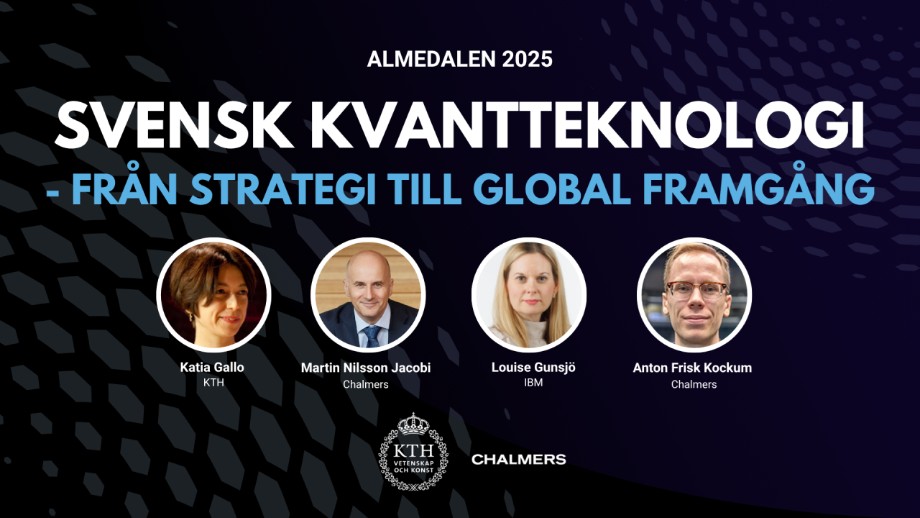
KTH and Chalmers' Joint Seminar on Quantum Technology
| Join a discussion on the national quantum strategy, the potential for Swedish industry, and opportunities for collaboration between academia, industry, and the public sector. Participants:
Anton Frisk Kockum & Katia Gallo (WACQT /NQCIS)
Louise Gunsjö, Vice President, Infrastructure Sales, IBM Northern, Central and Eastern Europe
Martin Nilsson Jacobi, Moderator, President and CEO, and Professor of Complex Systems, Chalmers | | | | |
Artistic impression of the Ring Clock. The clock built from a ring of quantum systems enables ultra-precise timekeeping. A single quantum particle coherently circles the ring—each loop a "tick"—allowing the clock to surpass thermodynamic limitations of classical clocks. Illustration: Alexander Rommel & TU Wien |
Quantum clocks can be more accurate than expected
| Quantum effects are widely used to achieve extremely precise measurements. But what is the ultimate limit of time accuracy? New results from TU Wien, Austria, Chalmers and the University of Malta reveal that it is possible to exceed previously assumed boundaries of precision, exponentially enhancing time accuracy. This breakthrough could pave way for next-generation high-precision measurements while shedding light on one of physics' greatest mysteries: the connection between quantum physics and thermodynamics. | | | | |
Funding opportunity for Swedish SME's
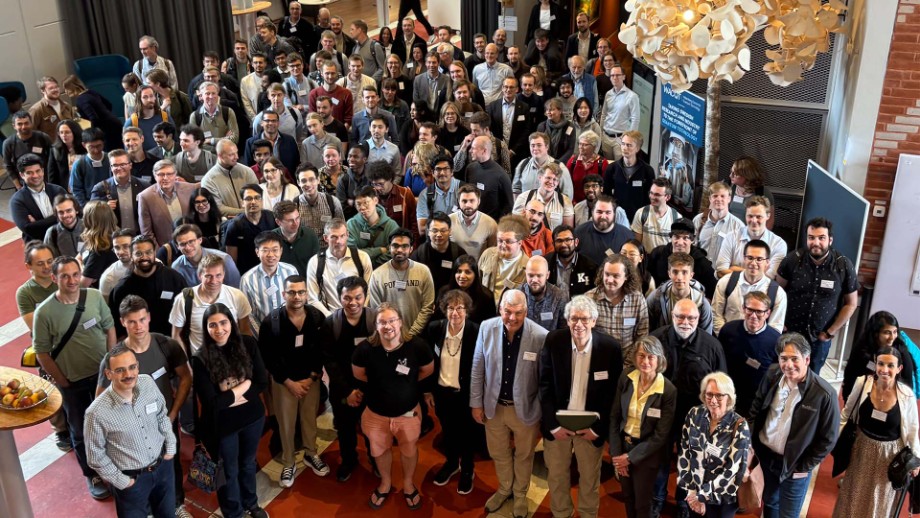
| WACQT invites Swedish SMEs to apply for industrial PhD or postdoc projects in quantum technology. Up to 3 projects will be funded to enhance collaboration and develop strategic technologies. Apply latest by August 15, 2025. | | | | | WACQT held the annual three-day review meeting this week, bringing together members from universities and industry to share the latest research findings and discuss progress and challenges in quantum technology. With WACQT’s mission to strengthen Sweden’s expertise in quantum technology, the annual review meeting serves as a vital forum for knowledge exchange. This year, over 170 participants attended. | | | | |
Yiyi Wang, Stockholm University.
| Yiyi Wang aims for a PhD and internships in Sweden
| | Yiyi Wang aims for a PhD and internships in Sweden
Department of Physics
News
Yiyi comes from Beijing in China. She continued on Santa Clara University and on a conference she met a postdoc from Stockholm University. She came to Fysikum on a WACQT Scholarship and is now a master student at the Quantum Materials Master Programme. | | | | | | | Anton Frisk Kockum, Associate Professor
WACQT / Chalmers
, has been honored with two prestigious awards. He was named an Outstanding Referee by the American Physical Society for his exceptional contributions to peer review. Additionally, he received the Wallmarkska Prize 2025 from the Royal Swedish Academy of Sciences for his groundbreaking research in quantum optics and quantum computing.
| | | | | | | Cameron Calcluth, PhD student at WACQT / Chalmers, has been awarded the prestigious Wenner-Gren Fellowship.This fellowship supports international scientific exchange and offers young researchers the opportunity for advanced postdoctoral training abroad for three years, followed by two years of research activities in Sweden. Cameron will conduct independent research at the Mathematical Institute at the University of Oxford for three years and at the Department of Computer Science at KTH in Stockholm for two years.
| | | | | | | | |
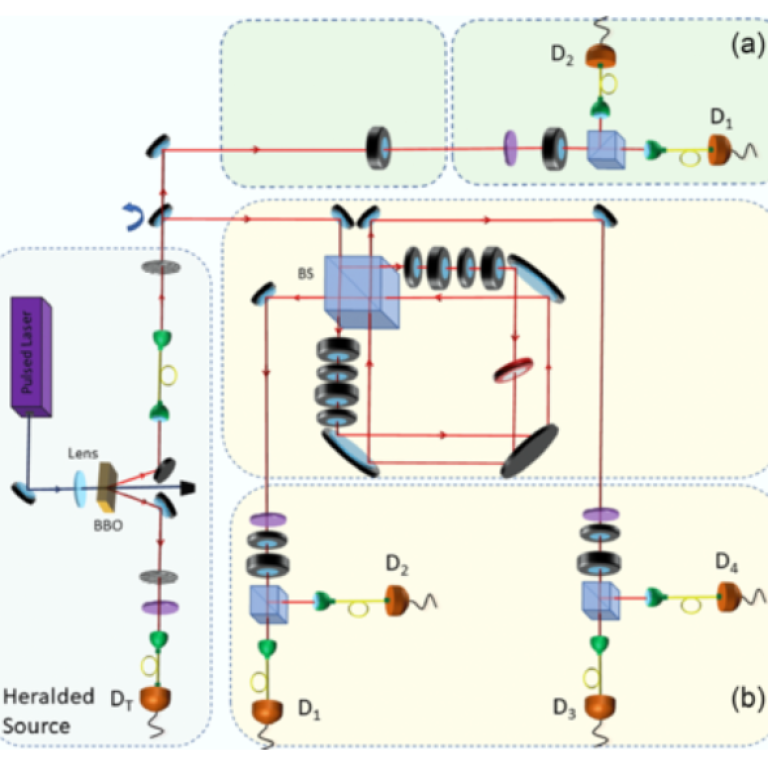
Experimental setup with heralded source | How do we know that a quantum system really behaves quantum mechanically?
| |
Researchers at the Department of Physics, Stockholm University and colleagues from other universities have developed and implemented a test that can reveal just that. Using entangled photons and a form of so-called non-locality inequalities (CHSH and CGLMP), they have shown that some experimental outcomes can only be explained by higher dimensional quantum systems. The higher the dimension of a quantum system, the more information it can carry - and the more powerful some quantum technologies can become. The result is an important step towards safe and reliable quantum technologies. It means we can build quantum devices where you don't have to rely blindly on the manufacturer or the technology, but where physics itself guarantees that quantum information is actually used.
| | | | |
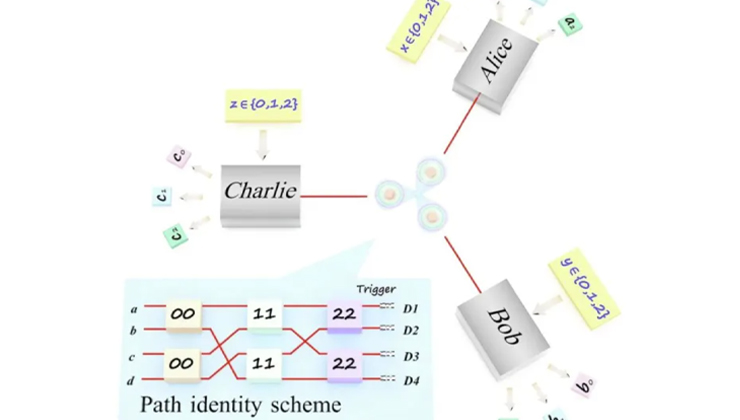
Three-dimensional three-particle GHZ state by Path Identity. | Important step for more complex quantum computing and communication protocols
| Researchers at Lund University have taken a significant step toward more advanced quantum technologies by demonstrating, for the first time, genuine high-dimensional multipartite nonlocality in entangled photon states. By working with three- and four-particle systems in three levels—so-called qutrits—the results reveal stronger deviations from local hidden variable theories than previously possible with traditional qubits. This breakthrough opens new possibilities for more powerful protocols in quantum communication and computing. | | | | |
Podcast with Mats Granath
| | | Can quantum technology change the world? Listen to an in-depth episode with Mats Granath, Director of the Guest Researcher Programme at WACQT. (in Swedish) | | | | | | |
WACQT Industry Workshop 2025 | Full house third year running
| | On April 24th, WACQT hosted the third annual Industry Workshop, attracting nearly 90 industry representatives and researchers. The event highlighted the growing interest and commitment to quantum technology, featuring a comprehensive program aimed at promoting collaboration and innovation. | | | | | Initiatives by WACQT researchers:
| - Quantum Leap - Nordita/ Stockholm University (view recording)
- Conference on AI and Quantum technology at Chalmers in November (24-25)
| | | | | | | | | | | | WACQT is committed to promoting career development, diversity and gender equality through networking and supporting activities. | | | | |
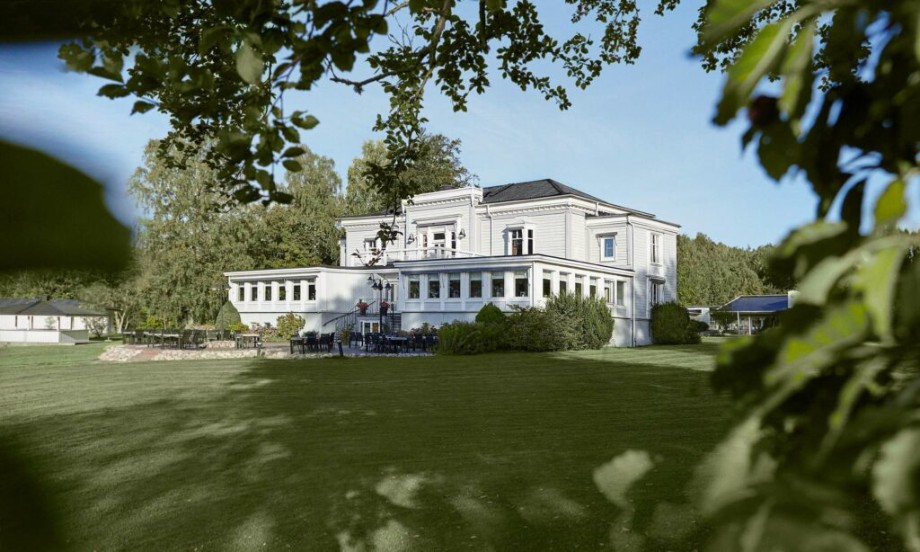
The 4th WACQT Summer School will take place 18-22 August at Aspenäs Herrgård.
A chance to learn from world-renowned experts in quantum technology, develop essential soft skills through career panels, pitch talks, poster sessions and presentation techniques, and network with 60-70 like-minded students and professionals.
| | | | | Future of quantum technology – can it live up to expectations?
|
Quantum technology could revolutionize fields like drug development, advanced materials, secure internet, and quantum computing. Despite global investments, significant challenges remain for widespread adoption. Göran Johansson from WACQT emphasizes the need for further research and development to achieve practical applications.
| | | | | The Swedish Research Council
VINNOVA | | | | |
Research and innovation bill approved
| | | | | IonQ Partners with Sweden’s Einride
| IonQ and Einride will collaborate to develop quantum solutions for fleet routing, logistics optimization, and supply chain solutions
IonQ’s investment will grow its European presence and reinforce commitment to building a quantum economy in Sweden and the European market. Read more | | | | |
Finnish Quantum Technology Strategy
|
On April 24, 2025, Finland's Ministry of Economic Affairs and Employment released a national Quantum Technology Strategy. It aims to leverage scientific strengths for economic growth and sustainability, emphasizing targeted investments and accelerated commercialization to maintain competitiveness in the global quantum landscape. Read more | | | | |
G7 now has a common vision for the future of quantum technology
| Earlier in June at their summit in Canada the leaders of G7 countries agreed with a common vision for quantum technology. G7 says quantum tech could transform many sectors and boost security, but it also poses risks. Global cooperation is needed to unlock its benefits and manage challenges responsibly. Read more | | | | |
Joint statement by Nordic leaders
| Nordic leaders commit to advancing quantum tech through collaboration in research, funding, regulation, and commercialization to secure a global leadership role and societal benefits. Read more | | | | |
Testing gravity with large quantum systems: what we know today
| Results from WINQ Unifying quantum mechanics and gravity is a major unsolved mystery in physics. The challenge lies in measuring the gravitational field of tiny quantum systems, which current technology can't achieve. This leaves questions about gravity's behavior in quantum superposition unanswered. Despite many theoretical approaches, the lack of experimental evidence makes it hard to find the right path forward. Read more
| | | | | |
|
|
|
|