InfraVis Annual CallThe InfraVis Annual Open Call closed 31 October.
We are thrilled to having received a wide range of applications for this year’s call. Applicants will receive notifications in mid-December. Thank you again to everyone who took the time to apply. For projects expected to take less than 100 hours no application is needed - just get in touch with us and we will see how we can help you. | | | | | Photo by Anna-Lena Lundqvist | |
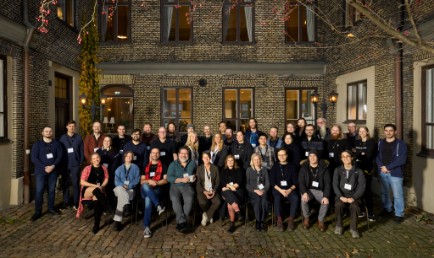
InfraVis Days at Gothenburg NodeThis year’s bi-annual InfraVis Days brought together colleagues from all eight nodes, hosted by the Gothenburg node at Chalmers University of Technology and the University of Gothenburg. As a national infrastructure spread across the country, it was a pleasure to gather in person for shared sessions, workshops, and inspiring discussions.
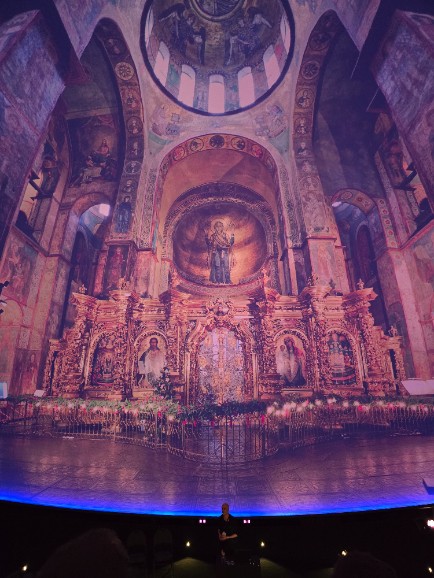
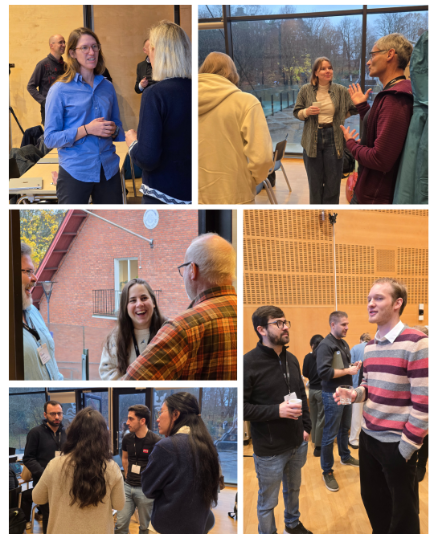
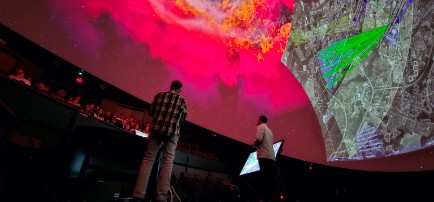
There were several highlights during this meeting. There were several highlights during this meeting. The content spanned from scanning techniques in Archaeology and Conservation, discussion on User Experience Design, text analysis and visualization, to visualizing our impact on cities and the marine environment. This year, we also included a dedicated morning session for our application experts to strengthen cross-node interaction and get to know each other better. Jonathan Westin gave a captivating presentation on the meticulous digitalization of inscriptions from the Saint Sophia Cathedral in Kyiv, and the challenges encountered along the way. An afternoon was dedicated to Universeum's Wisdome, where we revisited Saint Sophia through Jonathan Westin’s footage and reflected on Svalbard’s disappearing glaciers in memory of
Tyrone Martinsson, researcher and teaching professor of photography at HDK-Valand – Academy of Art and Design. We also had the opportunity to hear from Carter Emmart, invited by steering committee chair Anders Ynnerman, and learned about new perspectives of the Moon. Ida-Maja Hassellöv illustrated how an idea can grow from a Word draft into both an interactive visualization and a Nature Communications Earth and Environment publication. Lena Pareto shared findings from visitor evaluations of the dome experience and VisLab. We also had the chance to discuss the dome as a tool for visualization in a panel discussion with our guests including Martin Högenberg from Visual Arena and Gorky Glaser-Müller from Gothenburg University.
On the third day, InfraVis welcomed several Swedish research infrastructures for insightful presentations, including Onsala Space Observatory, Demscore, Chemical Imaging (CII), the Swedish NMR Centre, and Tjärnö Marine Laboratory.
Thank you to all who participated—your contributions made this InfraVis Days truly memorable. We look forward to continued collaboration ahead! | | | |
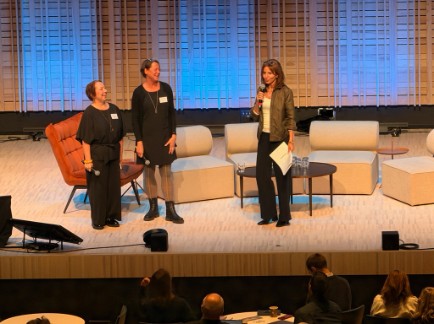
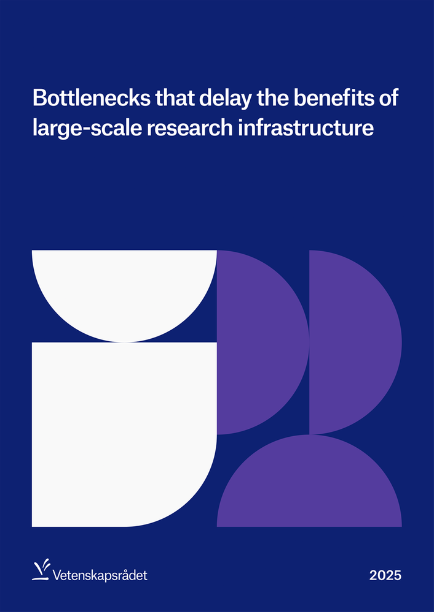
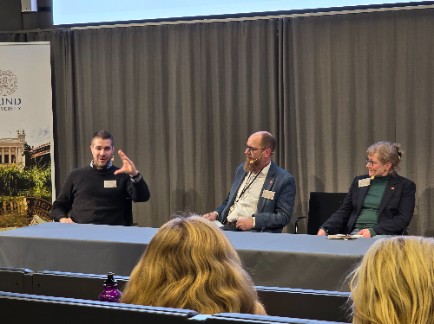
Turning the data bottleneck into discoveryAt the MAX IV Laboratory / European Spallation Source ERIC / SciLifeLab Summit in October, Kajsa M Paulsson, vice-director of InfraVis, and Eva Stensköld, director of Swedish National Data Service, shared a session on stage highlighting how our national research infrastructures are addressing one of today’s biggest challenges: the handling, analysis and visualization of the large volumes of data that are being produced. The background of the discussion is the March 2025 publication from the Swedish Research Council: Bottlenecks that Delay the Benefits of Large-Scale Research Infrastructure, where InfraVis was recognized as a key infrastructure complementary to MAX IV and ESS providing essential support for data visualization and analysis.
| | | |
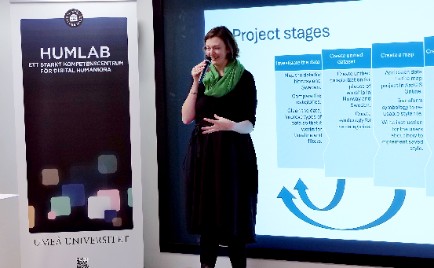
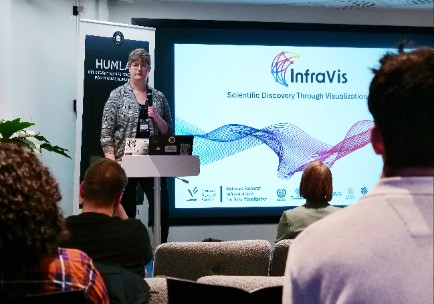
E-Science Days in UmeåInfraVis co-hosted a satellite event at the Swedish e-Science Academy 2025 in Umeå together with Humlab and the Environmental Archaeology Lab (MAL), focusing on how research infrastructures support the social sciences, arts, and humanities. Participants met to discuss shared challenges and explore digital tools. Three national infrastructures were featured: InfraVis, Huminfra, and SweDigArch—the latter supporting data-driven archaeological research through MAL in Umeå. InfraVis application experts Maria Podkorytova and Mattis Lindmark, from the node located at Humlab at Umeå University, were showcasing the InfraVis projects "NordPow" and "Storytelling through visualization: Interactive data visualization for education and museums".
| | | |
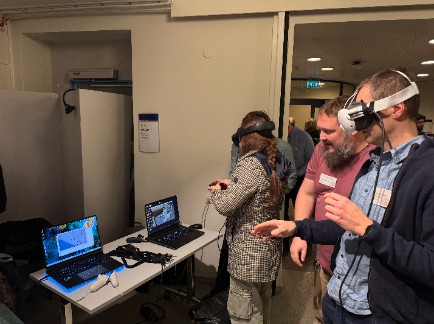
Lund Open Science DaysEmanuel Larsson, InfraVis node coordinator at Lund University, presented InfraVis at the Lund University Science Days on 19–20 November. Aligning with the conference theme, Open Science: Trust and Integrity in Science, he highlighted InfraVis’ role in supporting innovation and openness. The session gathered representatives from major Swedish research infrastructures and concluded with a panel discussion on advancing open science. Jens Nirme and Jonas Ahlstedt, also from the Lund University node, showcased some of their InfraVis projects in virtual reality.
| | | |
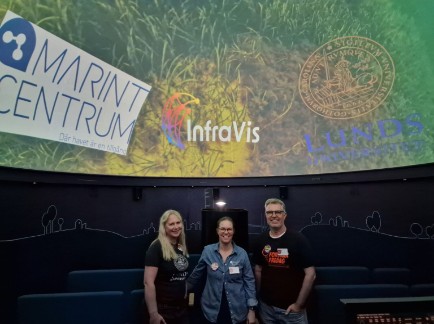
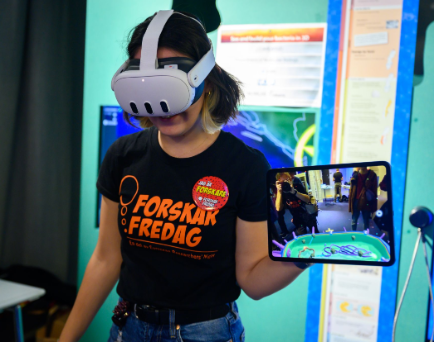
ForskarFredag SeptemberForskarFredag, part of European Researchers' Night, is an annual science festival held over one week. This year, several InfraVis nodes participated in the event that was held 22-27 September 2025. In Norrköping, Mario Romero and Alessandro Iop showcased how 3D-printed models and AI-driven simulations can reveal new insights into the human brain, while Jonas Lundberg introduced visitors to a cutting-edge air traffic simulation that explores future teamwork between humans and AI. In Lund, Helena Filipsson, Anders Persson, and Josefine Larsson — together with support from Anna Arnadottir and Jens Nirme from InfraVis — invited audiences into immersive 360° Baltic Sea experiences inside the DOME theater. In Umeå, InfraVis user Kemal Avican participated in the event. Mattis Lindmark, InfraVis Application Expert, has created the VR model that the person wearing the VR glasses is showing (photo: Gabrielle Beans). | | | |
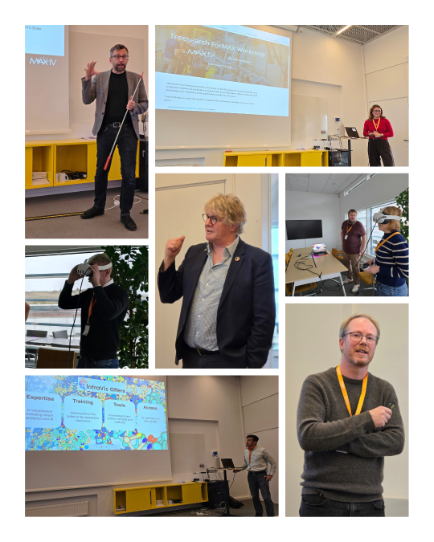
Treesearch WorkshopTreesearch, a national collaboration platform, held a workshop at MAX IV Laboratory in Lund, to inspire researchers and scientists to explore the application of synchrotron-based techniques. The workshop was aimed at new users, focusing on building user confidence. InfraVis Application Expert Alexandros Sopasakis, from the Lund University node, presented InfraVis to the audience, and Jonas Ahlstedt, from the same node, took the participants for a virtual tour in a 3D model of the ForMax beamline.
| | | |
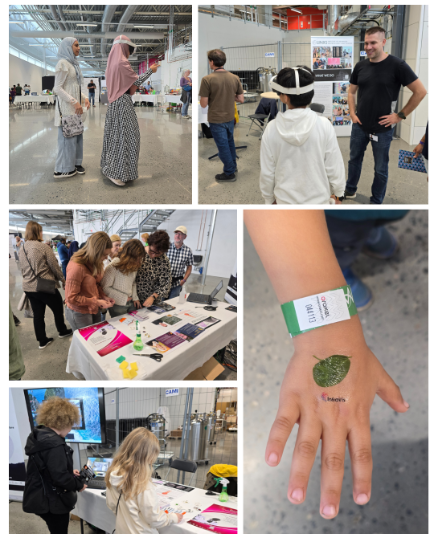
InfraVis at MAX IV Open DayInfraVis teamed up with LINXS Institute of Advanced Neutron and X-ray Science to welcome visitors at the Open Day at MAX IV Laboratory in Lund on a warm and sunny September Saturday. More than 300 people stopped by to explore the projects that InfraVis has supported, take a virtual tour of the ForMAX Beamline, and of course try out our temporary tattoo studio.
| | | |
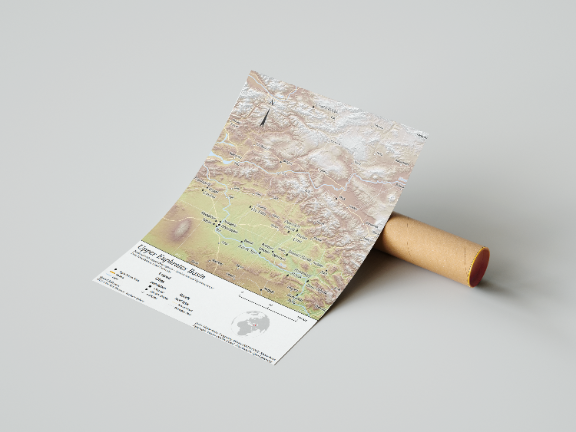
GIS visualization of archaeological sites in the upper Tigris and Euphrates River basinsA new project at the InfraVis node Humlab, Umeå University, developed GIS-based visualizations to explore how early communities in the Upper Tigris and Euphrates regions transitioned from hunting and gathering to farming. By integrating archaeological, environmental, and material culture data, the team produced maps and chronological diagrams that reveal human–environment patterns and support ongoing research with accessible visual insights. You can read more about the project here.
| | | |
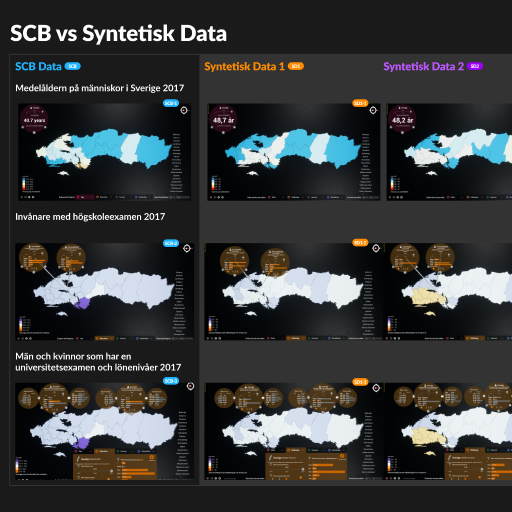
Synthetic Sweden – Exploring applications and limitations of synthetic demographic dataVisualization Center C in Norrköping is currently hosting “Sweden in Numbers,” an interactive touch-table installation designed to engage visitors with national statistics. The platform has now been expanded to explore how synthetic demographic data can be communicated in clear and meaningful ways. In this collaboration, application experts from the Linköping University node worked with InfraVis users to transform complex synthetic data into an interactive map, develop approachable storytelling around an unfamiliar concept, and integrate these insights into an immersive exhibition setting. This project marks an important step toward making advanced data concepts—such as synthetic data—accessible and engaging for broad audiences through visualization and interactivity. You can read more about the project here.
| | | | Meet the InfraVis Application Experts
|
Linnéa Tjernström
Media production and human–computer interaction
Linnéa Tjernström is a communications officer at Humlab, Umeå University. With a broad background in media production and human–computer interaction, she creates visual content that combines technology and design. Her work centers on motion graphics and illustrative design. She also draws on her interest in user experience to develop prototypes for usability testing.
| | | | Anders Hast
User Training
Based at Uppsala University, professor Anders Hast has taught Master-level courses in Computer Graphics and Scientific Visualization. For InfraVis, he arranges User Training and Internal Training on demand, delivered either onsite or via Zoom.
His research interests focus primarily on handwriting and face recognition, though they also extend to other related areas.
| | | |
Greetings from InfraVis Director Monica Billger and Management Team
|
Winter in the Nordic countries can be time for reflection and contemplation. A chance to slow down before we gear up for the new year. This autumn has been very fulfilling, with finalized projects, project prolongation, new collaborations, interesting conferences and of course all fruitful meetings with people. Merry Christmas and a Happy New Year,
Monica Billger
| | | | | | Follow InfraVis on Social Media | | | | | If you have news, suggestions or ideas relevant for InfraVis and data visualization, please let us know by emailing info@infravis.se Unsubscribe | |