Upcoming InfraVis Annual CallThe InfraVis annual call will open on October 1st and close on October 31st. To increase our reach, we are starting our communication now, before the summer break. After the summer, we will hold three online workshops presenting the details of the application process and open breakout rooms, where participants can receive help understanding their visualization needs and improving their applications. The workshops will be on September 19, 26 and October 3, from 13:00 to 15:00, in Zoom. Welcome! Welcome to sign up here for the workshops today already! | | | | | Infrastructure Development
| To further develop the infrastructure, InfraVis has worked on a selection of projects to build the skills of its application experts and improve collaboration with other infrastructure projects. These efforts help strengthen technical knowledge and teamwork to support innovation and research. |
Constructing a virtual Synchrotron X-ray beamline
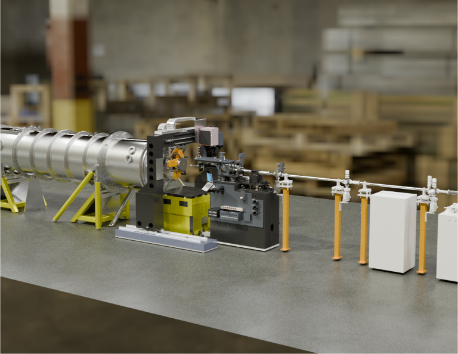
InfraVis and MAX IV researchers are turning CAD drawings into interactive virtual environments for education, training, and virtual experiments. Using Blender and Unreal Engine 5, they create immersive visualizations of beamlines like ForMAX at MAX IV. Next steps will be to refine the design for even smoother VR experiences. Read more. | | | |
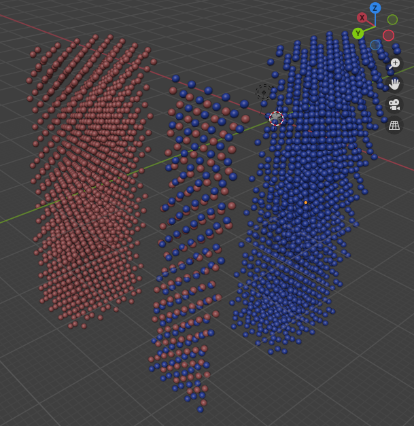
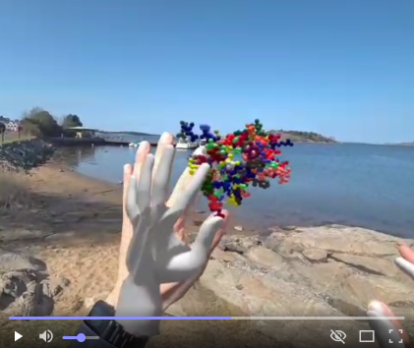
Visualization of Halogen Crystal StructuresA recently finalized Mid Sweden University project focuses on the visualization of halogen crystal structures under pressure, aiming to better understand transformations from molecular to non-molecular phases—particularly those involving incommensurately modulated structures. By leveraging 3D visualization tools, the goal was to make complex atomic behavior more interpretable for researchers studying structural phase transitions in simple molecular systems. The primary challenge addressed by this project lies in the inherent complexity of visualizing incommensurately modulated structures under pressure. The absence of translational symmetry complicates efforts to analyze and communicate structural transformations, particularly those occurring during phase transitions from molecular to non-molecular states. An opportunity emerged to develop a specialized visualization platform capable of handling aperiodic, particularly incommensurately modulated structures while maintaining clarity and interactivity. To find out more about this project, please visit infravis.se.
| | | |
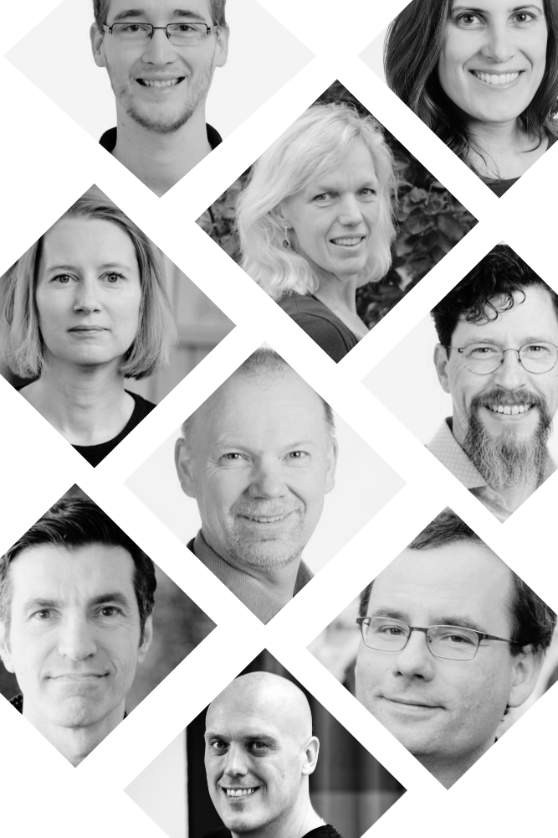
InfraVis FacultyThe InfraVis Faculty will play an important role in connecting research with visualization services—driving scientific progress, leading training initiatives, and providing expert support across diverse research domains that rely on visualization. It will consist of senior visualization researchers both from within InfraVis as well as external to it. So far, we have recruited internally. Next step will be external recruiting. | | | | |
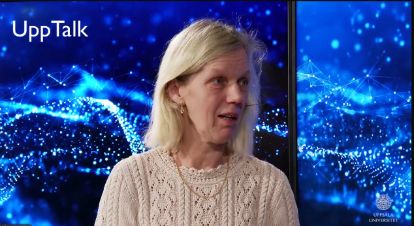
How can interdisciplinary collaboration drive research excellence?Interdisciplinary projects bring together experts from different fields, fostering new ideas and perspectives. But what happens when technology meets humanities or medicine? Ingela Nyström, Professor of Visualization and InfraVis Node Coordinator at Uppsala University, was interviewed in UppTalk, Uppsala University’s popular science seminar series on Zoom. There she discussed the broad applications of computerized image analysis and how collaborations drive new knowledge, with examples from WOMHER and of course InfraVis. Here you can watch the interview. | | | |
InfraVis Presenting at Chalmers UniversityEarlier this spring the Gothenburg node was invited to do a presentation at Chalmers University, Materials Physics Division Days. This year's theme was Data Management, and Joakim Bohlin's presentation (a visualization project in collaboration with MAX IV) was a good example of how to use open data. | | | |
SND Spring Outing to Chalmers and Universeum
As part of their annual tradition, Svensk Nationell Datatjänst (SND) organized a spring outing on May 19th, this year visiting Chalmers E-commons and InfraVis.
The morning featured presentations by Monica Billger, Sverker Holmgren, Fabio Latino, and Joakim Bohlin, followed by a tour of the server hall, including the Alvis and Vera clusters. In the afternoon, the group visited Universeum and Wisdome, where they viewed clips from immersive productions and a custom 3D visualization presented by Bohlin.
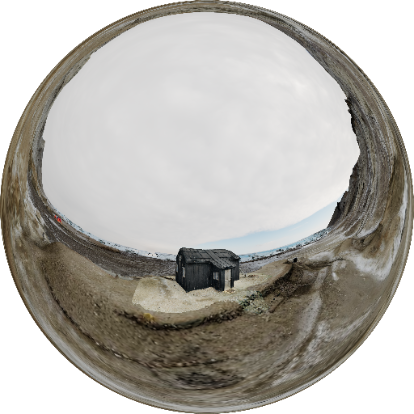
The visualization was based on open research data from researchdata.se, showcasing a 3D-scanned Antarctic research station from 1901. Bohlin also demonstrated a tool he developed for creating dome content from 3D models.
SND supports InfraVis for Data Management Plans (DMP) and related directives to help InfraVis users, and therefore this visit was greatly appreciated.
| | | | Meet the InfraVis Application Experts
|
Orfeas Eleftheriou, Chalmers University
Expert in Unreal Engine and digital twin visualizations Orfeas Eleftheriou specializes in real-time 3D environments with a focus on interactive digital twins, simulation-based visualization and city-scale modeling. With a background in Computer Science and Intelligent Computer Systems, he bridges technical development and user-centered design across scientific and industrial domains.
| | | | Christopher Peters, KTH Royal Institute of TechnologyChristopher Peters' research focuses on the social capabilities of artificial humanoid agents, graphical representations of humans embodied as virtual avatars and physical social robots, by investigating how humans perceive, interact with, and think about them. The goal is to create more effective human-machine interactions and explore their societal implications. Peters creates computational models to control verbal and nonverbal full-body behaviors of artificial individuals, groups, and crowds. His research leverages extended reality and computer game technologies to explore synergies between the physical and virtual worlds, for example using the virtual world to design interactions in the real world. Research applications range from extended reality interfaces for educational agents in e-learning environments to informing the design of urban environments that better account for the perspectives and direct experiences of residents. Keywords: Embodied Conversational Agents, Embodied AI, Social Robots, Extended Reality, Multi-agent systems, Game Technologies, Procedural Generation, Human-Machine Interaction, Human Visual Perception | | | |
Greetings from InfraVis Director Monica Billger and Management Team
|
As we approach the summer break, I want to take a moment to reflect on the vibrant activity within InfraVis. While many begin to slow down for summer, InfraVis continues to move forward.
We’re excited to share that InfraVis will be participating in Almedalen Week, the world’s largest democratic gathering, taking place in Visby from June 23rd to 27th. In addition, we are honored to be invited to present at the EECS Research and Impact Day at KTH on August 19th—another fantastic opportunity to showcase the growing impact of InfraVis.
On behalf of the entire InfraVis team, I wish you a restful and inspiring summer.
Warm regards, Monica Billger
| | | | | | Follow InfraVis on Social Media | | | | | If you have news, suggestions or ideas relevant for InfraVis and data visualization, please let us know by emailing info@infravis.se Unsubscribe | |